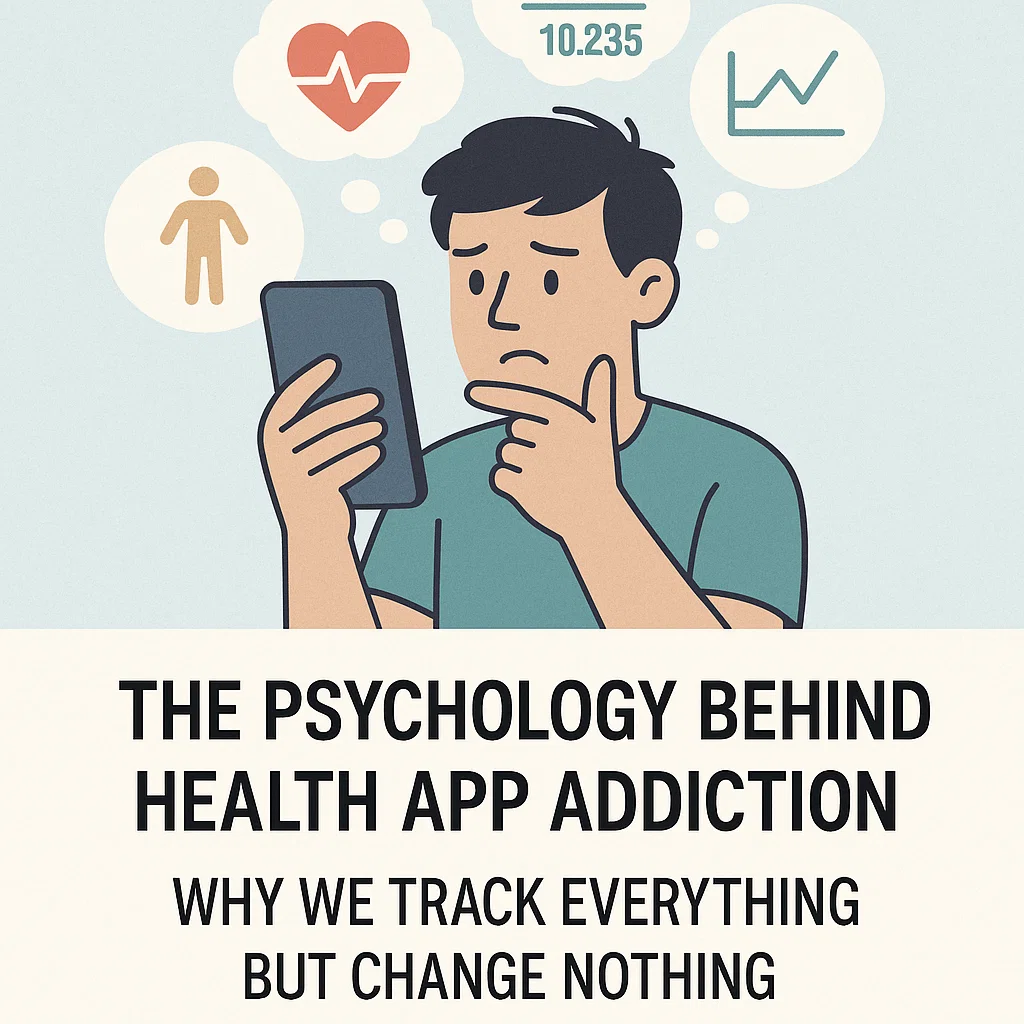
You check your step counter again. It’s the fourth time today. You’re at 8,847 steps and feeling pretty good about it. You carefully log your lunch calories, proud that you remembered every detail. Before bed, you study your sleep app’s colorful charts from last night.
Sound familiar? If you’re like millions of people, you have more health data about yourself than ever before. You know exactly how many steps you took, what you ate, how you slept, and when your heart rate went up. Your phone tracks everything.
But here’s the weird part: despite all this tracking, most people don’t actually get much healthier. They just get better at tracking.
Why does this happen? And more importantly, how can you break free from this cycle?
The Feel-Good Trap: Why Tracking Feels Like Progress
Here’s something strange about how our brains work: they can’t always tell the difference between tracking something and actually improving it.
When you log your meals or check your step count, your brain releases a small amount of dopamine. That’s the same chemical that makes you feel good when you accomplish something important. So your brain treats “I tracked my food” almost the same as “I ate healthy food.”
It’s like the difference between reading about exercise and actually exercising. Reading fitness magazines and researching workout plans can feel a lot like training. Your brain gets excited about the topic and feels like you’re making progress, even though you haven’t actually moved your body.
This is why people can become obsessed with logging every detail of their health while staying stuck in the exact same habits month after month. The tracking becomes the habit, not the healthy behaviors it was supposed to encourage.
How Apps Hook You (And Why That’s a Problem)
Health apps borrow tricks from video games and social media to keep you coming back. They use bright colors, achievement badges, progress bars, and streak counters. Each of these triggers your brain’s reward system.
Progress bars make you want to “complete” them, even if what you’re measuring doesn’t really matter for your health. Achievement badges create fake celebrations throughout your day. Streak counters make you afraid to break your “47-day logging streak,” even if the logging itself isn’t helping you.
These apps also use what casinos figured out long ago: random rewards. Some days your stats look great (you feel amazing!). Other days they’re disappointing (you feel awful and need to check again later). This up-and-down pattern is incredibly addictive.
The result? You become hooked on checking the app, not on being healthy.
Why More Information Doesn’t Equal Better Health
Here’s a myth that refuses to die: people think they just need more information to be healthier. Apps operate on this idea, giving you more and more detailed data about your body.
But think about it. Do you really not know that vegetables are good for you? Do you need an app to tell you that exercise and good sleep are important? Most people already know what they should do for their health.
The problem isn’t lack of information. The problem is that knowing what to do and actually doing it are completely different things.
When apps give you seventeen different sleep metrics or detailed breakdowns of every nutrient you ate, they can actually make things worse. You become overwhelmed by information and paralyzed by analysis. You spend so much mental energy tracking and analyzing that you have no energy left for actually changing anything.
How Real Change Actually Happens
Real health changes don’t come from detailed data analysis. They come from building automatic habits.
Habits work like this: something in your environment (a cue) triggers an automatic behavior (routine) that gives you some kind of reward. For example, feeling stressed triggers reaching for a snack, which provides temporary comfort. Over time, this becomes so automatic you don’t even think about it.
Most health tracking focuses on your conscious, thinking mind. But habits bypass that entirely. You might have detailed data showing you snack when stressed, but knowing this doesn’t automatically change the brain pathways that drive stress eating.
Real habit change usually requires changing your environment, not increasing your willpower. Want to eat more fruit? Put fruit where you can see it. Want to exercise more? Lay out your workout clothes the night before. Make good choices easier and bad choices harder.
This environmental approach often conflicts with the data-heavy approach of tracking apps, which assume better information leads to better choices.
The Perfectionism Problem
Health apps accidentally encourage perfectionist thinking that can sabotage your progress. They promote precise goals, constant monitoring, and detailed metrics that create unrealistic expectations.
This leads to “all-or-nothing” thinking. You set big goals like 10,000 steps every day or logging every single meal. When life gets in the way (and it always does), you feel like a failure and often give up completely.
But real behavior change is messy and inconsistent. It involves good days and bad days, experiments that work and others that don’t, and constant adjustments. The precision of tracking apps makes this normal messiness feel like failure.
There’s also something psychologists call “moral licensing.” When your app tells you you’ve been “good” (you hit your step goal or stayed within your calorie limit), your brain gives you permission to be “bad” later. The app’s positive feedback can actually encourage the unhealthy behaviors you’re trying to avoid.
When Social Features Backfire
Many apps include social features like leaderboards and friend comparisons. While these seem motivating, they often create problems.
People typically share their best days and biggest achievements, creating an unrealistic picture of everyone else’s consistency. You see highlight reels, not the full story of struggles and setbacks. This can make your normal human imperfection feel like personal failure.
Social comparison can also shift your motivation from internal satisfaction (“I feel strong after exercising”) to external validation (“I want people to see my achievements”). When exercise becomes about social media recognition rather than feeling good, it becomes fragile and dependent on others’ reactions.
Making Tracking Actually Work
The goal isn’t to stop tracking entirely, but to use it in ways that support real change instead of creating fake progress.
Here are some simple ways to make tracking more effective:
Focus on patterns, not perfection. Use your data to notice when and where you naturally make good choices, then build on those patterns. If you sleep better when you read before bed, focus on building that routine rather than obsessing over sleep scores.
Experiment with small changes. Instead of just collecting data, use it to test tiny improvements. If your step data shows you’re most active on weekends, plan specific weekend activities you actually enjoy.
Set “minimum effective dose” goals. Instead of 10,000 steps daily, aim for three 10-minute walks per week. Make goals so small they feel achievable even on terrible days.
Track less, but track smarter. Pick one simple thing to focus on rather than trying to monitor everything. You’ll get better results from consistent small changes than from perfect tracking of multiple metrics.
The Bottom Line
Health apps can be useful tools, but they’re not magic solutions. The most important thing to understand is that sustainable health improvements come from developing a good relationship with your body and its signals, not from optimizing metrics.
The goal isn’t to track everything perfectly. It’s to understand yourself better and make small, sustainable changes that actually enhance your well-being. When tracking serves this purpose—providing insights that lead to real experiments and gradual improvement—it becomes valuable. When it becomes a substitute for actual change, it’s just another form of procrastination.
Your health is more than numbers on a screen. The best tracking supports your journey toward feeling better, not replacing that journey with data collection. Focus on changes that work in your real life, not the metrics that simply make you feel productive.
Real health improvement happens through small, consistent actions that fit into your actual daily routine. Sometimes the best health app is the one you use less, not more.
This article explains why people love tracking their health but struggle to make real changes. It’s for educational purposes and not medical advice. Talk to your doctor about health concerns.