
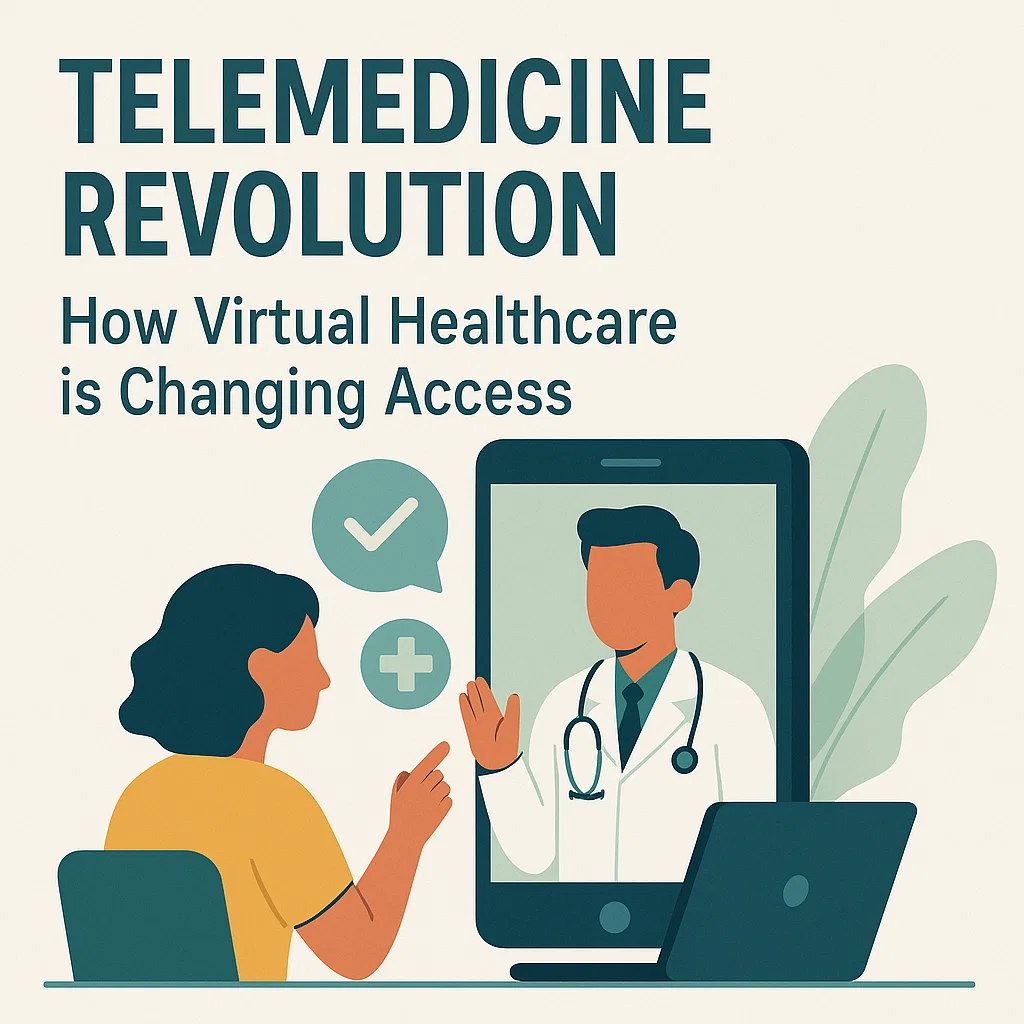
Imagine calling your doctor and having a face-to-face conversation without leaving your living room. Five years ago, this might have seemed like science fiction to many people. Today, it’s become as routine as video calling a friend. This transformation represents one of the most significant shifts in healthcare delivery in decades, fundamentally changing how patients access medical care and how providers deliver services.
To understand the magnitude of this change, consider this: before 2020, fewer than one percent of healthcare visits in the United States occurred through telemedicine platforms. By the peak of the pandemic, that number had jumped to nearly 40 percent virtually overnight. While usage has since stabilized, it remains dramatically higher than pre-pandemic levels, signaling a permanent shift in how we think about healthcare delivery.
But what exactly is driving this revolution, and how is it reshaping the very concept of healthcare access? Let’s build our understanding from the ground up.
Understanding Telemedicine: More Than Just Video Calls
When most people hear “telemedicine,” they picture a video call with a doctor. While video consultations are indeed a major component, telemedicine encompasses a much broader spectrum of healthcare delivery methods. Think of it like the difference between saying “transportation” and just meaning “cars.” Cars are important, but transportation includes trains, planes, boats, and bicycles—each serving different needs and purposes.
At its foundation, telemedicine is any healthcare service delivered remotely using technology. This includes live video consultations, but it also encompasses remote monitoring of patients with chronic conditions, digital transmission of medical images for specialist review, and even text-based consultations for routine follow-ups. Some patients wear devices that continuously monitor their heart rhythm and automatically alert their cardiologist if irregularities are detected. Others use smartphone apps to photograph skin lesions for dermatologist evaluation. Each represents a different facet of the telemedicine ecosystem.
The key insight here is that telemedicine isn’t trying to replace all in-person healthcare—it’s filling gaps and creating new possibilities for care delivery. Just as email didn’t replace all phone calls but created new ways to communicate efficiently, telemedicine is creating new pathways for healthcare that complement traditional in-person visits.
Breaking Down Geographic Barriers
Perhaps nowhere is the impact of telemedicine more profound than in addressing geographic disparities in healthcare access. To understand this impact, let’s consider the challenge many rural communities face. Picture a small town several hours from the nearest major medical center. Residents might have a family doctor, but accessing specialists often means lengthy travel, time off work, and significant expense.
Now imagine that same community with robust telemedicine capabilities. A patient experiencing chest pain can have an EKG transmitted directly to a cardiologist hundreds of miles away within minutes. A child with a suspicious rash can be evaluated by a pediatric dermatologist without a four-hour round trip. Mental health counseling becomes available where previously none existed. The geographic constraints that once limited healthcare access begin to dissolve.
This transformation extends beyond rural areas. Urban patients also benefit from eliminated travel time and reduced exposure to illness in medical facilities. A working parent can consult with their child’s pediatrician during a lunch break rather than taking an entire afternoon off work. An elderly patient with mobility challenges can maintain regular contact with their healthcare team without navigating transportation obstacles.
The ripple effects reach deeper than individual convenience. When people can access care more easily, they’re more likely to seek treatment early when conditions are most treatable. This proactive approach often leads to better health outcomes and lower overall healthcare costs—a concept healthcare economists call “upstream intervention.”
Technology as the Great Enabler
The telemedicine revolution couldn’t happen without several technological foundations coming together at the right time. Understanding these building blocks helps explain why this transformation is happening now rather than a decade ago.
High-speed internet connectivity serves as the fundamental infrastructure. Reliable broadband enables smooth video consultations and rapid transmission of medical data. The expansion of broadband access, particularly in previously underserved areas, has made telemedicine feasible for populations that were once digitally isolated.
Smartphone proliferation has placed powerful computing devices in nearly everyone’s pocket. These devices now include high-quality cameras capable of capturing detailed medical images, sensors that can monitor heart rate and other vital signs, and processing power that rivals desktop computers from just a few years ago. When you combine this personal technology with specialized medical apps, patients become partners in data collection and monitoring.
Cloud computing provides the backbone for storing and sharing medical information securely across different platforms and geographic locations. Electronic health records can now be accessed by authorized providers anywhere, enabling coordinated care regardless of physical location. This technological infrastructure creates the seamless data flow that makes effective telemedicine possible.
Perhaps most importantly, improvements in user interface design have made these technologies accessible to people regardless of their technical expertise. The same principles that make consumer apps intuitive and easy to use are now being applied to medical platforms, removing barriers that might otherwise prevent adoption.
Expanding Specialist Access
One of the most significant ways telemedicine is changing healthcare access involves specialist care. In traditional healthcare delivery, accessing specialists often requires navigating complex referral systems, lengthy wait times, and significant travel. Telemedicine is reshaping this entire process.
Consider mental health services as an example. Many communities have severe shortages of mental health professionals, leading to wait times that can stretch for weeks or months. Telemedicine platforms now connect patients with licensed therapists and psychiatrists across much larger geographic areas, dramatically reducing wait times and increasing access to care.
The same principle applies across medical specialties. A patient in a small town can now consult with experts at major medical centers without leaving their community. Dermatologists can evaluate skin conditions through high-resolution photographs. Radiologists can interpret imaging studies from anywhere in the world. Cardiologists can monitor patients’ heart rhythms in real-time through wearable devices.
This expanded access doesn’t just benefit patients—it also allows specialists to extend their reach and impact. A specialist who might previously serve only patients within driving distance of their office can now help patients across an entire region or even across state lines, depending on licensing regulations.
Transforming Chronic Disease Management
Chronic diseases like diabetes, hypertension, and heart disease require ongoing monitoring and management that traditionally meant frequent office visits. Telemedicine is revolutionizing this model by enabling continuous or frequent remote monitoring that provides more comprehensive data while reducing the burden on both patients and healthcare systems.
Remote monitoring devices can track blood pressure, blood sugar levels, weight, and other vital metrics automatically, transmitting this information directly to healthcare providers. This creates a much more complete picture of a patient’s health status than periodic office visits could provide. Instead of getting a snapshot of how a patient is doing on one particular day, providers can see trends and patterns over time.
This continuous monitoring also enables earlier intervention when problems arise. Rather than waiting for a patient’s next scheduled appointment to discover that their blood pressure has been consistently elevated, providers can be alerted immediately and adjust treatment plans promptly. This proactive approach often prevents minor issues from becoming major health crises.
The psychological benefits of this enhanced monitoring shouldn’t be overlooked either. Many patients report feeling more confident and secure knowing that their healthcare team is keeping a closer eye on their condition. This peace of mind can actually contribute to better health outcomes by reducing stress and encouraging better self-care behaviors.
Cost Implications and Healthcare Efficiency
The economic impact of telemedicine extends far beyond the obvious savings in travel time and transportation costs. When we examine the broader financial implications, we see potential for significant improvements in healthcare efficiency and cost-effectiveness.
From the patient perspective, telemedicine can reduce several categories of costs. Direct costs like travel expenses and parking fees are eliminated for virtual visits. Indirect costs such as lost wages from time off work are significantly reduced when consultations can happen during lunch breaks or other convenient times. For patients with chronic conditions requiring frequent monitoring, these savings can be substantial over time.
Healthcare providers also benefit from improved efficiency. Virtual consultations often require less time than in-person visits for certain types of care, allowing providers to see more patients during their available hours. The reduced overhead costs associated with virtual visits—no need for as much physical space, reduced staff requirements for routine follow-ups—can make healthcare delivery more economically sustainable, particularly in underserved areas.
The broader healthcare system benefits from reduced emergency room visits and hospitalizations that result from better access to preventive and routine care. When patients can easily consult with their healthcare providers for minor concerns, they’re less likely to let problems escalate to the point where emergency care becomes necessary.
Challenges and Limitations
While the benefits of telemedicine are substantial, understanding its limitations helps create realistic expectations about where virtual care works best and where in-person visits remain essential. Think of this like understanding the difference between when email works well for communication versus when face-to-face meetings are necessary.
Physical examinations that require hands-on assessment remain challenging to replicate virtually. While high-resolution cameras can capture visual information effectively, conditions that require palpation, listening to heart and lung sounds, or other tactile assessment methods still generally require in-person evaluation. However, technology continues to evolve in this area, with new devices that can transmit detailed physical examination data remotely.
Technology barriers remain significant for some populations. While smartphone adoption has grown dramatically, digital literacy varies widely among different age groups and socioeconomic populations. Ensuring equitable access to telemedicine requires addressing these technology gaps through education, support, and sometimes providing devices or internet access to underserved populations.
Regulatory and licensing challenges create complexity in telemedicine delivery. Healthcare providers are typically licensed to practice in specific states or regions, which can limit their ability to provide telemedicine services to patients in other locations. While emergency measures during the pandemic temporarily relaxed many of these restrictions, the long-term regulatory framework for telemedicine continues to evolve.
Privacy and security concerns require careful attention in any healthcare technology. Protecting patient information during virtual consultations and data transmission requires robust cybersecurity measures and adherence to healthcare privacy regulations. As telemedicine adoption grows, ensuring these protections remain strong becomes increasingly important.
The Future Landscape
Looking ahead, several trends suggest that telemedicine will continue evolving and expanding rather than simply stabilizing at current levels. Understanding these emerging trends helps us anticipate how healthcare delivery might continue changing in the coming years.
Artificial intelligence integration promises to enhance telemedicine capabilities significantly. AI tools can help with initial patient assessment, suggest potential diagnoses for provider consideration, and even monitor patient data for concerning patterns. These tools don’t replace human medical expertise but rather augment it, potentially making telemedicine consultations more comprehensive and effective.
Wearable technology continues advancing rapidly, providing increasingly sophisticated health monitoring capabilities. Future devices may monitor a much broader range of health indicators continuously, creating unprecedented amounts of health data that can inform medical decision-making. This evolution could make remote monitoring even more comprehensive than traditional periodic office visits.
Integration between telemedicine platforms and traditional healthcare systems is improving, creating more seamless patient experiences. Instead of telemedicine being a separate service, it’s becoming integrated into comprehensive care models where patients move fluidly between virtual and in-person care based on their specific needs at any given time.
Making Telemedicine Work for Everyone
The success of the telemedicine revolution ultimately depends on making these services accessible and beneficial for diverse populations with varying needs, technology access, and comfort levels. This requires thoughtful design and implementation that considers equity and inclusion from the outset.
Healthcare systems are developing programs to provide technology access and training for patients who might otherwise be left behind in the digital transition. This includes lending tablet devices for patients who don’t own suitable technology, providing internet access in community locations, and offering training sessions to help people become comfortable with telemedicine platforms.
Provider training is equally important. Healthcare professionals need to develop new skills for effective virtual care delivery, including techniques for building rapport through video consultations, conducting visual assessments remotely, and managing the unique communication challenges that can arise in virtual settings.
The integration of telemedicine into medical education ensures that future healthcare providers will be native users of these technologies rather than having to adapt to them later in their careers. Medical schools and residency programs are increasingly incorporating telemedicine training into their curricula.
The telemedicine revolution represents more than just a temporary adaptation to unique circumstances—it signifies a fundamental shift in how we conceptualize healthcare delivery and access. By breaking down geographic barriers, expanding specialist access, enabling better chronic disease management, and improving healthcare efficiency, telemedicine is creating new possibilities for maintaining and improving health.
This transformation continues evolving as technology advances and as we learn more about which types of care work best in virtual versus in-person settings. The future likely holds not a replacement of traditional healthcare with virtual care, but rather a more sophisticated integration of both approaches that maximizes the benefits of each while addressing their respective limitations.
Understanding these changes helps patients, providers, and communities make informed decisions about incorporating telemedicine into their healthcare strategies, ultimately contributing to better health outcomes and more accessible care for everyone.
Disclaimer: This article provides educational information about telemedicine trends and technology. It is not intended as medical advice. Always consult with healthcare professionals for medical decisions and treatment options.